Monday, 20 October 2014

Report on GMOs by Rebecca

GMOs

What are GMOs?

The acronym GMO stands for Genetically Modified Organism. GMOs are genes taken from one organism to another to make a stronger organism. Before modern day gene transfers were invented, people used a method called grafting or cross-breeding. This method is cutting off a plant from the bottom of the stem then later attaching it into a slit that was cut in a different type of plant and tying the plants together until they are fully bonded. This version may take many attempts and will result in different products each time. Modern day gene splicing uses a technique called genetic engineering where they withdraw genes from one organism and inject them into another resulting in a gene transfer and a stronger plant.

Why?

GMOs are used for creating stronger plants that can resist disease,tolerate herbicides and fight pests. GMOs are also used for delaying the ripening process of a plant while they are transported over long distances.

Safety

GMOs are meticulously checked for health and safety regulations of the food and drugs act of Canada and the United States of America. Even though they check for health and safety regulations one thing that concerns me is that they use things like rat poison in GMOs to harm pests. This worries me because they don't check the stability of the food so we could really be harming our bodies, possibly even poisoning them by eating GMO foods. I urge everybody to make the right choices and choose organic foods.

Did you know?

There is no GM meat in Canada?

Spaghetti, Garlic toast, sausage and meatballs


Today one of the groups made Spaghetti, Garlic toast, sausage and meatballs here is how they made it.

Spaghetti- We used can soup and noodles. Boil noodles and heat up sauce.
Meatballs- Ground beef, water, breadcrumbs, salt and pepper. Put ground beef into a bowl. Add half a cup of water and breadcrumbs. Mix. Roll into balls then sear.
Sausages- Cut sausage into small pieces. Fry in a pan.
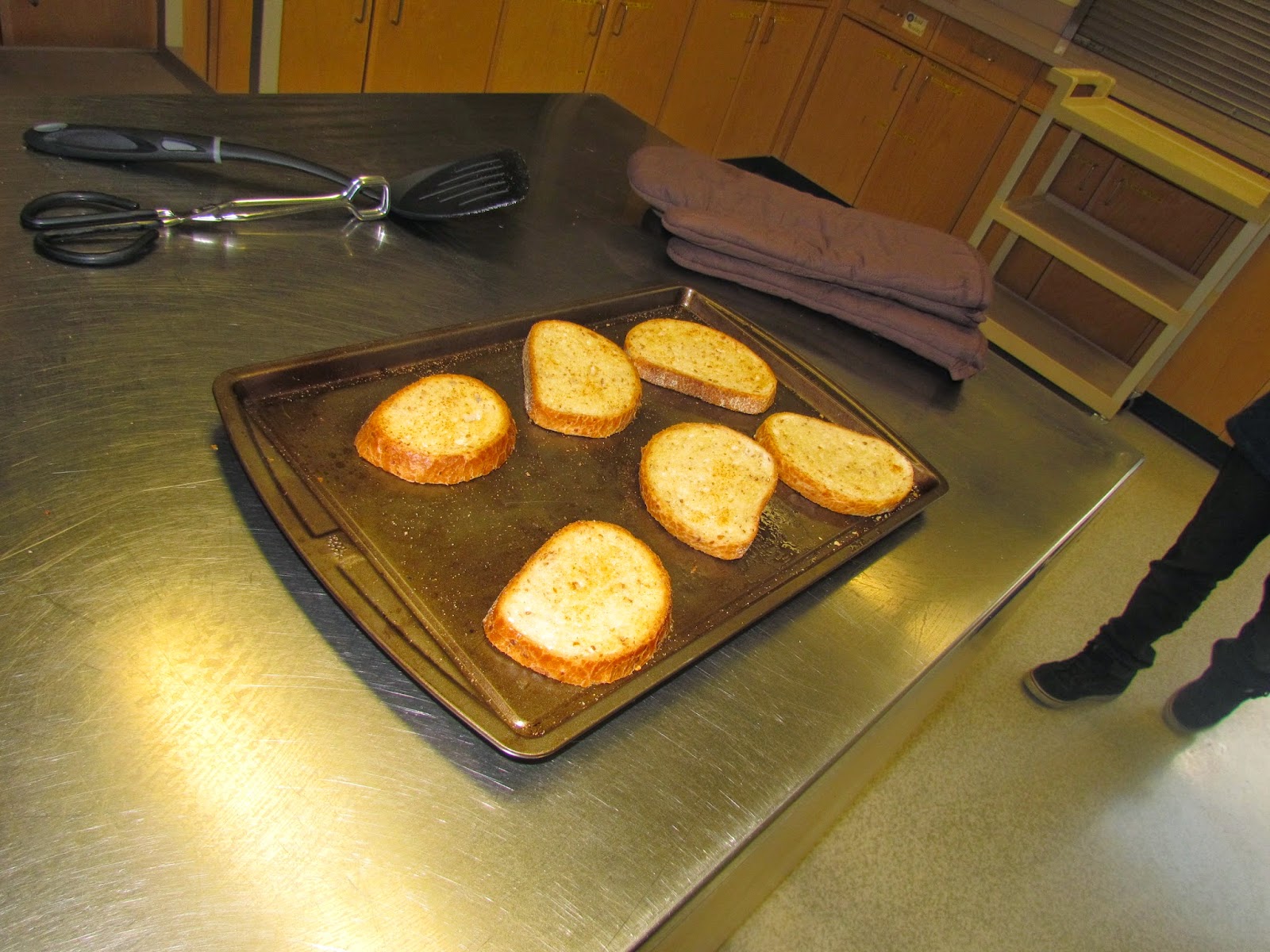
Garlic Toast-  Rye bread, Butter, Garlic Powder. Take the garlic powder and butter and mix it together. Spread on rye bread. Put in oven for 15 minutes or until golden brown.

Such a yum experience !! -Maya


Wednesday, 8 October 2014

Monday, 6 October 2014

Take 1-its A Wrap and Fully-Loaded Potato Puffs

Today in culinary arts we made Take 1-Its a Wrap it where you  take chopped or torn lettuce, sesame ginger dressing. We place chopped cooked chicken, dry chow mien noodles, and the lettuce in the center of a tortilla. And last add more ginger dressing. We fold the tortilla and enjoy!


Next we made fully loaded potato puffs. First we took frozen potato tots and then cook them. Next we added shredded cheddar cheese on to the tator tots , bacon bits, and chopped green onions. And last add sour cream.and at the end  it all tasted really good.

Wednesday, 1 October 2014

Mini-Pizzas and Fruit Shishkabobs 2

Today the second group made Mini Pizzas and Fruit Shishkabobs as well.


MSG by Kari


 Monosodium glutamate (MSG, also known as sodium glutamate) is the sodium salt of glutamic acid, one of the most abundant naturally-occurring non-essential amino acids. The U.S. Food and Drug Administration has given MSG its generally recognized as safe designation. Although many people identify themselves as sensitive to MSG, in controlled studies scientists have been unable to consistently trigger reactions. The European Union classifies it as a food additive permitted in certain foods and subject to quantitative limits. Food manufacturers sell and use MSG as a flavor enhancer because it balances, blends and rounds the perception of other tastes.

 People say that they have reactions to MSG. These reactions — known as MSG symptom complex — include:

   Headache
    Flushing
    Sweating
    Facial pressure or tightness
    Numbness, tingling or burning in the face, neck and other areas
    Rapid, fluttering heartbeats (heart palpitations)
    Chest pain
    Nausea
    Weakness

 However, researchers have found no definitive evidence of a link between MSG and these symptoms. Researchers acknowledge, though, that a small percentage of people may have short-term reactions to MSG. Symptoms are usually mild and don't require treatment. The only way to prevent a reaction is to avoid foods containing MSG.

MSG by MADIY

Monosodium Glutamate also known as MSG is the sodium salt of glutamic acid one of the most naturally occurring non-essential amino acid. Many people identify themselves as sensitive to MSG. In controlled studies scientists have been unable to consistently trigger reactions. Manufactures use MSG as a flavor enhancer because it balances and blends and rounds the perception of taste. Our body's need MSG but just like anything else if we get too much it, it's bad for us.